Student-centric advice and objective recommendations
Higher education has never been more confusing or expensive. Our goal is to help you navigate the very big decisions related to higher ed with objective information and expert advice. Each piece of content on the site is original, based on extensive research, and reviewed by multiple editors, including a subject matter expert. This ensures that all of our content is up-to-date, useful, accurate, and thorough.
Our reviews and recommendations are based on extensive research, testing, and feedback. We may receive commission from links on our website, but that doesn’t affect our editors’ opinions. Our marketing partners don’t review, approve or endorse our editorial content. It’s accurate to the best of our knowledge when posted. You can find a complete list of our partners here.
Private vs. Public K-12: What to Consider
 By
Lisa Freedland
By
Lisa Freedland
Lisa Freedland is a Scholarships360 writer with personal experience in psychological research and content writing. She has written content for an online fact-checking organization and has conducted research at the University of Southern California as well as the University of California, Irvine. Lisa graduated from the University of Southern California in Fall 2021 with a degree in Psychology.
Full BioLearn about our editorial policies

Maria Geiger is Director of Content at Scholarships360. She is a former online educational technology instructor and adjunct writing instructor. In addition to education reform, Maria’s interests include viewpoint diversity, blended/flipped learning, digital communication, and integrating media/web tools into the curriculum to better facilitate student engagement. Maria earned both a B.A. and an M.A. in English Literature from Monmouth University, an M. Ed. in Education from Monmouth University, and a Virtual Online Teaching Certificate (VOLT) from the University of Pennsylvania.
Full BioLearn about our editorial policies
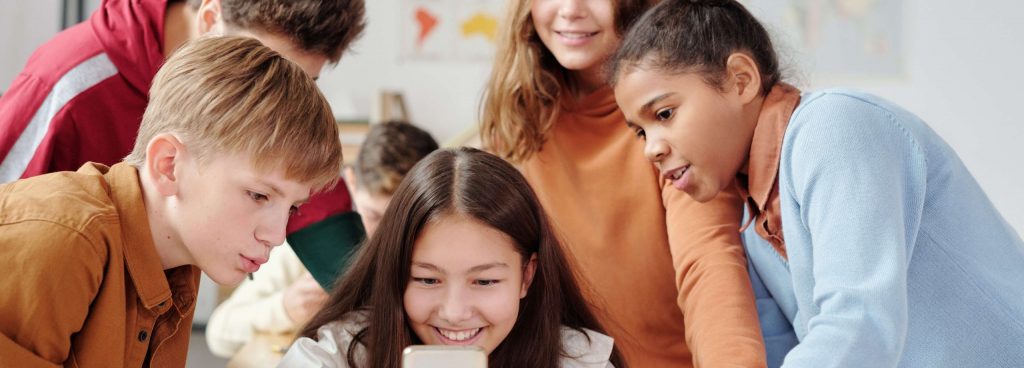
As children progress through the educational system, some parents are unsatisfied with the public K-12 schools in their district. While this may be due to a variety of valid reasons, it does not always mean that private school is the next best option. There are plenty of advantages and disadvantages to attending a public K-12, and the same is true for private K-12 schools.
To find out more about the pros and cons of attending a private K-12, keep on reading!
Also see: Scholarships360’s free scholarship search tool
Private K-12 advantages
To start things off on a positive note, we’ll first go over the advantages of attending a private K-12. Let’s get into it!
1. Smaller class sizes
Perhaps one of the most noticeable advantages of attending a private K-12 is the smaller class sizes. Because the ratio of students to staff is smaller, students receive personal or individualized help more easily.
For reference, classes of 25+ or even 30+ students (in more populated states) are not uncommon for public schools. Private schools, on the other hand, may have as few as 10 students per teacher. Less students in a class makes it easier for every student to get the help they need.
If you sense that your child may benefit from more individualized help or attention, private schools may be a good choice.
2. Focus on academics
For many parents, quality of education is atop the list of the most important factors in choosing a school. If that’s the case for you, then it may be worth it to take a look at private schools. Although not always the case, this is because private schools often emphasize academics more than their public school counterparts. They also often provide a wider array of core and elective courses for students to try. This will allow students to expand their knowledge whilst possibly finding new subjects that interest them.
Many private schools also come with their own, unique educational philosophies. This may translate to utilizing a specific teaching method throughout students’ classes. If you find a private school with a philosophy you love, perfect! If not, it’s important to note that some public schools have them too.
For more details on a specific school’s academics (or philosophy), we recommend taking a look through their course guide. While doing so, here are some questions to consider:
- What Advanced Placement (AP) or equivalent college-level courses are offered?
- Do the schools offer research opportunities?
- Do the schools have a large variety of elective courses, including those your child may be interested in?
- Are there extracurriculars your child may be interested in?
3. Parents have more influence
If you would like to be more involved and have a larger say in your child’s school’s decisions and policies, private schools may be a good option. Compared to their public counterparts, private K-12’s often have more parent-teacher communication and parental involvement.
Thus, attending private school allows you to feel and truly be more involved in their education. You will also be made more aware of any school issues or challenges as they arise.
4. Networking
Networking is all about getting to know and making connections with those around you. Although doing so is typically considered most important in college, attending a private K-12 will allow students to get a head start. This is because private schools typically have connections to many individuals in professional and other impressive career paths. Thus, successfully networking in private K-12 schools may help students obtain their dream college acceptance, job, or internship down the road.
5. Tuition assistance and financial aid
Private schools often come with a financial cost that public schools do not have. However, many private K-12’s offer a range of financial aid options to interested families. This is done to provide an affordable and accessible alternative to public schools. To learn more about receiving financial aid for private K-12’s, be sure to check out “Finding scholarships for private K-12 schools”!
Don’t miss: High school checklist: Freshman through senior year
Private K-12 disadvantages
Although there are many advantages to attending private K-12 schools, there are a few disadvantages as well. Before deciding whether a private K-12 would be the best choice for your child or not, you should take these into consideration:
1. Teachers do not have to be state-certified
Although this may be surprising, something that sets public and private school teachers apart is that those at private schools do not need to be certified by the state. This is because private schools do not receive funding from the government, allowing them to create their own rules for hiring teachers. Public schools, on the other hand, must follow state guidelines when hiring teachers. Such regulations often dictate that teachers must: have a degree, certification, teaching hours, and plan to complete a master’s some years after starting employment.
See also: How to become a teacher guide
2. Less extracurriculars
While the extra emphasis that private schools often put on education is a huge plus, it sometimes comes with the cost of having less extracurricular activities available. For example, it is often very easy for students at public schools to create a club or organization based around their interests. However, this is often not the case at private schools – some of which may not even allow students to create clubs of their own. This leads to public schools typically having a wider range of clubs than their private school counterparts.
3. Lots of pressure
Besides contributing to a relative lack of extracurriculars, some private schools’ emphasis on academics may also cause students to feel overwhelmed. This is because they may feel pressure to perform just as well or better than their other high-achieving peers, leading to stress. In addition to academic pressures, students may feel the need to have the same new items (e.g. clothes, technology, etc.) as their peers. Such pressures may lead some students to experience burnout and feel isolated.
4. Lack of diversity
Another possible downside of attending a private K-12 is the lack of diversity they will likely have in comparison to public schools. More often than not, students attending private schools come from relatively wealthy backgrounds. This comes with the possibility of causing children attending private schools to have a false perception of what the real world is like. Further, experiencing diversity is a good thing for any child to experience. Not only will it help them better understand others’ cultures and beliefs, but it will also expose them to a wider variety of viewpoints and perspectives.
5. Location
Unless you’re looking into private boarding schools, location is another hugely important factor in choosing a private school. While some may have plenty of public and private schools near them, public schools far outnumber their private counterparts. Thus, it’s important to consider the location of the “right” private school for your child.
If you decide on a boarding school, then location should be less of an issue. If your child prefers a day school on the other hand, location is very important. Deciding on a private day school that’s quite far equates to a longer commute time. In turn, this may lead to less time to complete coursework and partake in extracurricular activities. Staying local reduces this time, allowing your child to both have more time for coursework and to hang out with school friends.
6. Costly
Last, but certainly not least, private schools are known to come with a pretty hefty cost (at least in comparison to public schools). Such expenses typically include the costs of tuition, uniforms, fees, and other items. These charges can accumulate fast, and not every family can feasibly pay these costs.
Thus, a huge plus of attending public schools is that they are paid for by taxes, and are therefore “free” for all to attend. Although you may be required to pay for lunch or field trips, these expenses are often far, far lower than that of attending a private K-12. While you can certainly receive financial aid from private K-12 schools, attending a public school may be the better option for families whose money is tight.
And with that, we’re done!
Those are some of the primary advantages and disadvantages of attending a private K-12. As for the advantages and disadvantages of their public counterparts, you can consider the “cons” of a private K-12 to be the “pros” of a public K-12. Similarly, the “pros” of attending a private K-12 would be the “cons” of attending a public school.
So, how do you determine which would be the best choice for you? Great question! Let’s take a look at some final tips.
Also see: Why should I earn college credit in high school?
Which should you choose?
We hope all these have helped you figure out which type of school works best for your child (or yourself!). Ultimately, we argue that it’s most important that a school fits your own, personal criteria. If it does, whether the school is a public or private truly won’t seem like a big deal.
Similarly, it’s perhaps most important to consider what type of school you’d think would be best for your child. To help make this decision, consider all the factors, advantages, and disadvantages of attending a private school listed above. It may also be helpful to ask questions about:
- Courses or programs the school offers that set it apart from other schools in the area
- The school’s educational philosophy
- Extracurricular activities that are available
- The school’s safety policies
- To an administrator: What about the school are you most proud of?
No matter which type of school you choose to go with, just remember that there are thousands upon thousands of both private and public schools all across the U.S. Above all, we recommend ensuring that both you and your child are comfortable with the specific school they attend. This is arguably far more important than whether a school is private, public, or even a charter.
And with that, we’ll send you off. We wish you the best in your school search, and hope you find the one that’s right for your child. Happy schooling!
P.S.: If you or your child has any questions about school, classes, or college down the road, we’ll be here to help!
Related: Free summer programs for high school students
Frequently asked questions
Are private schools really better?
Thus, parents and students alike should not choose private schools solely due to the notion that private schools are necessarily “better” than public ones. Rather, it’s best to attend a school that’s right for you and where you believe you’ll thrive (no matter whether it’s public or private)!
How much does a private school cost?
How do admissions processes differ between private and public schools?
Do private schools have better college placement rates than public schools?


 SAT" printed on his pencil">