Overview
From Princeton
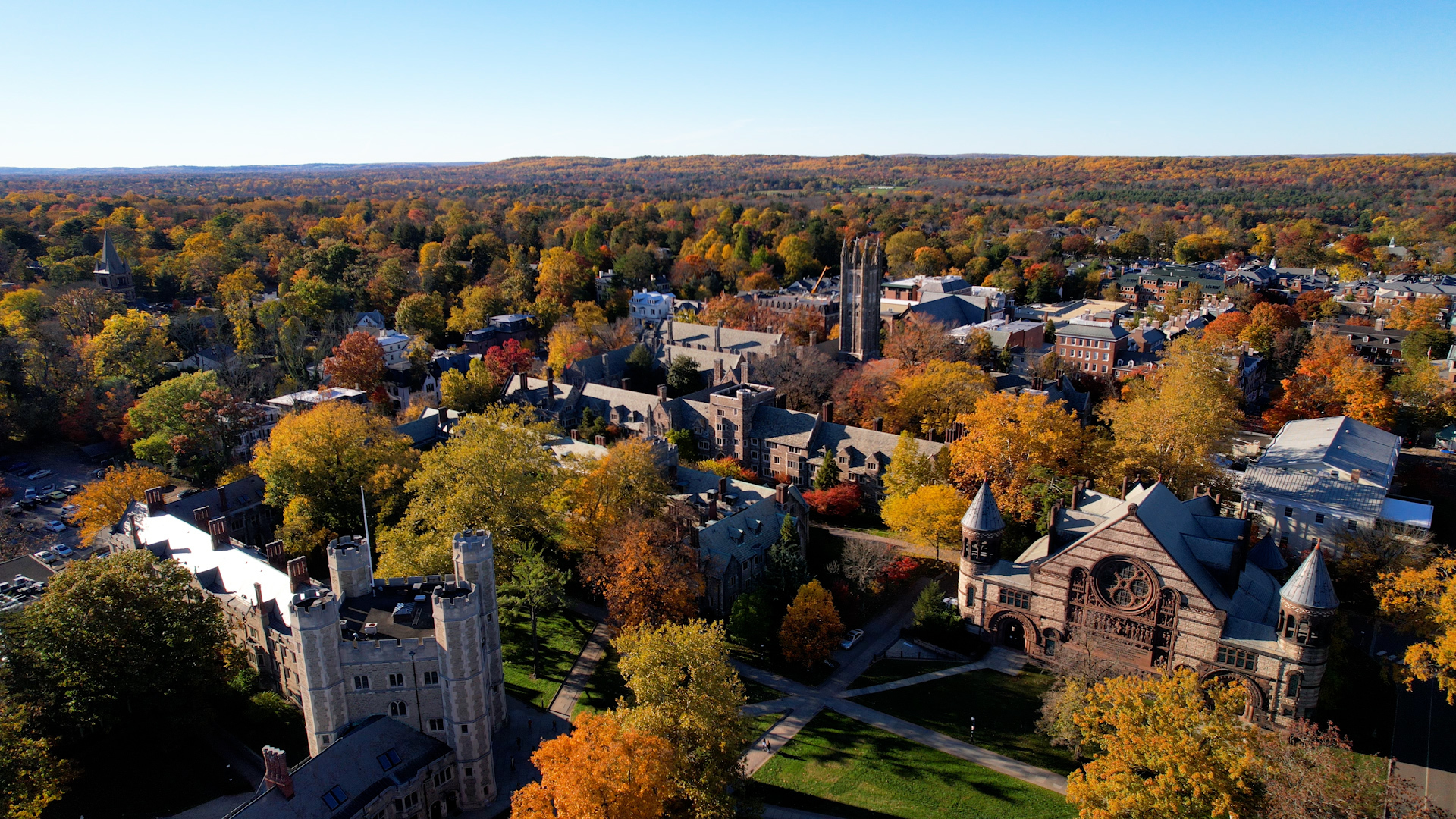
Princeton University is a place where you can allow yourself to be different because you will fit right in. We are a world-class research university and residential community that values compassion for others as much as a passion for academic research. Our liberal arts curriculum allows for deeper, more meaningful levels of learning. Students declare one of our 37 majors and can earn one or more of our 50+ minors or certificate programs.
Here, every student completes a senior thesis in a field of their choice and is guided through the process by a faculty mentor. Princeton’s engaged faculty, small class sizes and accessible advisers ensure that all students are supported, motivated and encouraged.
And know that Princeton is attainable, accessible and affordable. You can graduate from Princeton with little to no debt. Our no-loan financial aid policy replaces student loans with grants that do not need to be paid back. Not only is Princeton affordable, but it can often be less expensive than a state school.
Essay
Scholarships & Financial Aid
Financial Aid & Affordability Overview
From Princeton University
Princeton is attainable, accessible and affordable. Our aid program is designed to encourage all qualified students — regardless of financial circumstances — to consider applying for admission to Princeton. Reflected in Princeton’s financial aid program is our commitment to access and affordability. Princeton admission is need-blind — there is no disadvantage in the admission process for financial aid applicants. This ensures a continued and growing enrollment of a diverse group of students from all socioeconomic backgrounds. If offered admission, Princeton will meet 100% of your demonstrated financial need with grant aid. In fact, Princeton is often less expensive than a state college or university.
We determine a family’s ability to pay using our own simplified formula. Princeton’s no-loan policy replaces student loans with grant aid that students do not pay back — this makes it possible to graduate with little to no debt.
$80,415
$72,272
$8,143
Cost Breakdown
Estimated Cost:
$80,415The sticker price at Princeton is $80,415. This includes the cost of tuition and fees, room and board, books and supplies, and other miscellaneous expenses.
The cost of attendance can vary from year to year and will typically rise over your four years in college. That said, colleges will recalculate your financial aid every year to take price increases and changes in your financial situation into account.
College costs can look different for every student based on their financial situation. To get a more accurate picture of what tuition at Princeton would look like for you, try entering your financial information into their Net Price Calculator.
Princeton University Financial Aid
To apply for financial aid at Princeton University, you’ll need to submit the Free Application for Federal Student Aid (FAFSA).
The FAFSA uses financial information from the prior, prior year. That means you can submit the form even if you or your parents haven’t filed last year’s taxes.
The FAFSA code for Princeton University is 002627.
If you are looking for more information on how to complete the FAFSA, check out Scholarships360’s How to Complete the FAFSA Guide.
Apply to these scholarships due soon
See more New Jersey scholarshipsPrinceton University QuestBridge Scholarships
Princeton is a member of QuestBridge, which is a prestigious scholarship program that supports high-achieving students from low-income backgrounds. Students who are “matched” to Princeton University through QuestBridge receive a four year, full ride scholarship to the school. If you are interested in learning more about QuestBridge, you can check out our QuestBridge Scholarship guide.
Princeton University’s 100% Need-Met Guarantee
Princeton meets 100% of admitted students’ financial need. Using the FAFSA and/or CSS Profile, they calculate your need and offer a combination of scholarships and federal loans to cover any costs you and your family cannot pay.
No Loan Policy at Princeton
Princeton is a no-loan school, which means that their financial aid packages offer students grants and scholarships in place of the federal loans that are typically part of a package. This means that their financial aid is more generous than most, and they help bridge the gap between cost and student need. Some no-loan schools offer this policy for all accepted students while others only extend it to students below a specific income level, or to in-state students. Be sure to check Princeton's website for details on their No-Loan policy.
Pell Grants at Princeton University
20% of students at Princeton University receive Pell Grants.
The federal government awards Pell Grants to undergraduate students who demonstrate financial need by filling out the FAFSA. Students with a bachelor’s or professional degree are not eligible. Pell Grants do not be repaid. If you receive a Pell Grant, the award amount should remain consistent at any college you gain admission to. You can learn more about Pell Grant eligibility here.
Outside Scholarships
Students can use outside scholarships to supplement their financial aid package at Princeton. Outside scholarships are awards offered by private and non-profit organizations separate from their college. To browse vetted, reliable outside scholarships, check out our popular lists:
Princeton University Financial Aid Resources
For more information about financial aid at Princeton, or for questions that are specific to your financial situation, we recommend that you reach out directly to the financial aid office!
Here’s how you can get in touch:
- Website: https://finaid.princeton.edu/
- Email: [email protected]
- Phone: 609-258-3330
Admissions
Admissions Overview
From Princeton University
During the admission process, our goal is to find students who will thrive in Princeton’s rigorous academic environment. With this in mind, we offer a suggested course of study to help students prepare for Princeton. We are a community of learning that is enriched by the wide range of experiences and perspectives of our students, faculty and staff. Undergraduate students benefit from the extraordinary resources of a world-class research institution dedicated to undergraduate teaching.
Whenever you can, challenge yourself with the most rigorous courses possible, such as honors, Advanced Placement (AP) and dual-enrollment courses. We will evaluate the International Baccalaureate (IB), A-levels or another diploma in the context of the program’s curriculum.
Consult your school adviser or counselor to plan a program to help you succeed at whatever college or university you attend.
6%
34
1518
1518 is the median SAT score and 34 is the median ACT score for admitted students at Princeton. A score that is close to this median value indicates that you have a good chance of admission to the institution. However, it’s important to remember that colleges judge applications holistically. If the rest of your application is strong, it’s possible to make up for lower test scores.
Coalition Colleges
Princeton is a Coalition Member College, which means they have completed a vigorous vetting process from the Coalition for College to ensure that they “provide substantial support to lower-income, under-resourced and/or first-generation students; offer responsible student financial aid; and demonstrate a commitment to student graduation.” That also means you can apply to Princeton via the Coalition Application. The Coalition Application makes it easy to obtain application fee waivers if you qualify. It’s also a great way to discover other colleges that have demonstrated a strong commitment to affordability and strong student outcomes.
Does Princeton have a supplemental essay?
Yes, Princeton University includes a supplemental essay in their application. Luckily, Scholarships360 has a free guide to help you answer Princeton's essay prompt and stand out in the application process.
Princeton Supplemental Essay Guide
Is Princeton test-optional?
Princeton University is test-optional, which means that applicants are permitted, but not required, to submit their standardized test scores. If you choose not to submit your scores, admissions officers will weigh your grades, extracurriculars, essays, and interviews more heavily. If you aren’t sure whether to submit your standardized test scores, Scholarships360’s guide on whether to submit your test scores to test-optional schools can help.
What test scores do you need to get into Princeton University?
Colleges use standardized tests like the SAT, ACT, or CLT as one of many factors to determine their admissions decisions. A high score on one of these tests does not guarantee admission to a college, and a low score does not guarantee rejection. However, the majority of accepted applicants to Princeton University receive between a 33 and a 35 on their ACT, or a 1480 and a 1585 on their SAT.
Regular Decision
What is the application deadline at Princeton?
Students must apply by January 1 to enroll at Princeton during the fall semester. Remember that college applications involve many pieces, including essays, a transcript, letters of recommendation, and more. Be sure to start your application as soon as you can to make sure you have enough time to make it as compelling as possible.
Is Princeton University need-blind?
Yes, Princeton University has need-blind admissions, which means they do not take financial need into account when they decide who to accept. If your FAFSA and/or CSS Profile indicate that you would need substantial financial aid, you will still be on equal footing with applicants who do not require any aid at all.
Academics
Student/Faculty Ratio
5:1
Graduation Rate
97%
Popular Majors
Percent of Students
Social Sciences
19%
19% of graduates
Engineering
18%
18% of graduates
Computer & Information Sciences
14%
14% of graduates
Biological & Biomedical Sciences
10%
10% of graduates
Public Administration & Social Services
10%
10% of graduates
Physical Sciences
6%
6% of graduates
History
5%
5% of graduates
English Language & Literature
3%
3% of graduates
Languages & Literatures
3%
3% of graduates
Psychology
3%
3% of graduates
Mathematics
3%
3% of graduates
Visual & Performing Arts
2%
2% of graduates
Philosophy & Religious Studies
2%
2% of graduates
Area, Ethnic, Cultural, & Gender Studies
2%
2% of graduates
Architecture
1%
1% of graduates
Student Body
Undergraduate Students
5,527
Pell Grant 19%
Undergrad Students Over 25 1%
Percent Male / Female 50% / 50%
Ethnic Diversity at Princeton
38% White
24% Asian / Pacific Islander
12% International / Non-Citizen
10% Hispanic
8% Black
7% Multiracial
2% Unknown
Student Outcomes
Student Outcomes Overview
From Princeton University
Being a Princetonian means having an expansive network to tap for personal and professional development. More than 25,000 people come back to Princeton each year for Reunions, showing just how dedicated they are to reconnecting with their friends and the University. At Reunions and other events throughout the year — Alumni Day, fall football weekends, alumni conferences — the University offers a variety of intellectual, service and social activities ranging from athletic contests and arts performances to public lectures and Career Services events.
With 97,000+ members found in 155 countries and in all 50 states, the Alumni Association of Princeton University encourages and provides opportunities for lifelong engagement with the University and its robust alumni community. Academic departments across the University also bring students and alumni together around shared interests.
Graduate Income
$110,066
Median Debt $10,320
Debt 10 years after graduation $109
Graduation Rate 97%
What is the graduation rate at Princeton University?
97% of students who start at Princeton University finish their degree within six years of enrolling. This is 39% more than the national median. A higher graduation rate indicates that students have better experiences at an institution.
How much do graduates of Princeton University go on to earn?
The median income of students 10 years after starting at Princeton University is $110,066. This is $59,675 more than the national median.
This data is from the College Scorecard, which only surveys students from Princeton University who received federal financial aid.
Graduate earnings can vary widely based on many factors other than school choice. Major and career path are two important factors in how much a student goes on to earn. For more information, check out Scholarships360’s article on the average starting salary out of college.
How much do students at Princeton take out in loans?
Graduates of Princeton take out a median of $10,320 in federal student loans. This is $3,180 less than the national median. As you make decisions about your college loans, be sure to inform yourself on the advantages and disadvantages of each loan option. Scholarships360’s guide to navigating these different options is a great place to start.
Data Sources
We strive to provide users with the most up-to-date information and source data from publicly available sources, including the College Scorecard and directly from the colleges. College statistics can change throughout the year, but we do our best to update them as quickly as possible. If you see an error, feel free to contact us.
Join for exclusive scholarships, personalized matching, and application tracking. 0% Spam, 100% Free.