Overview
From DU
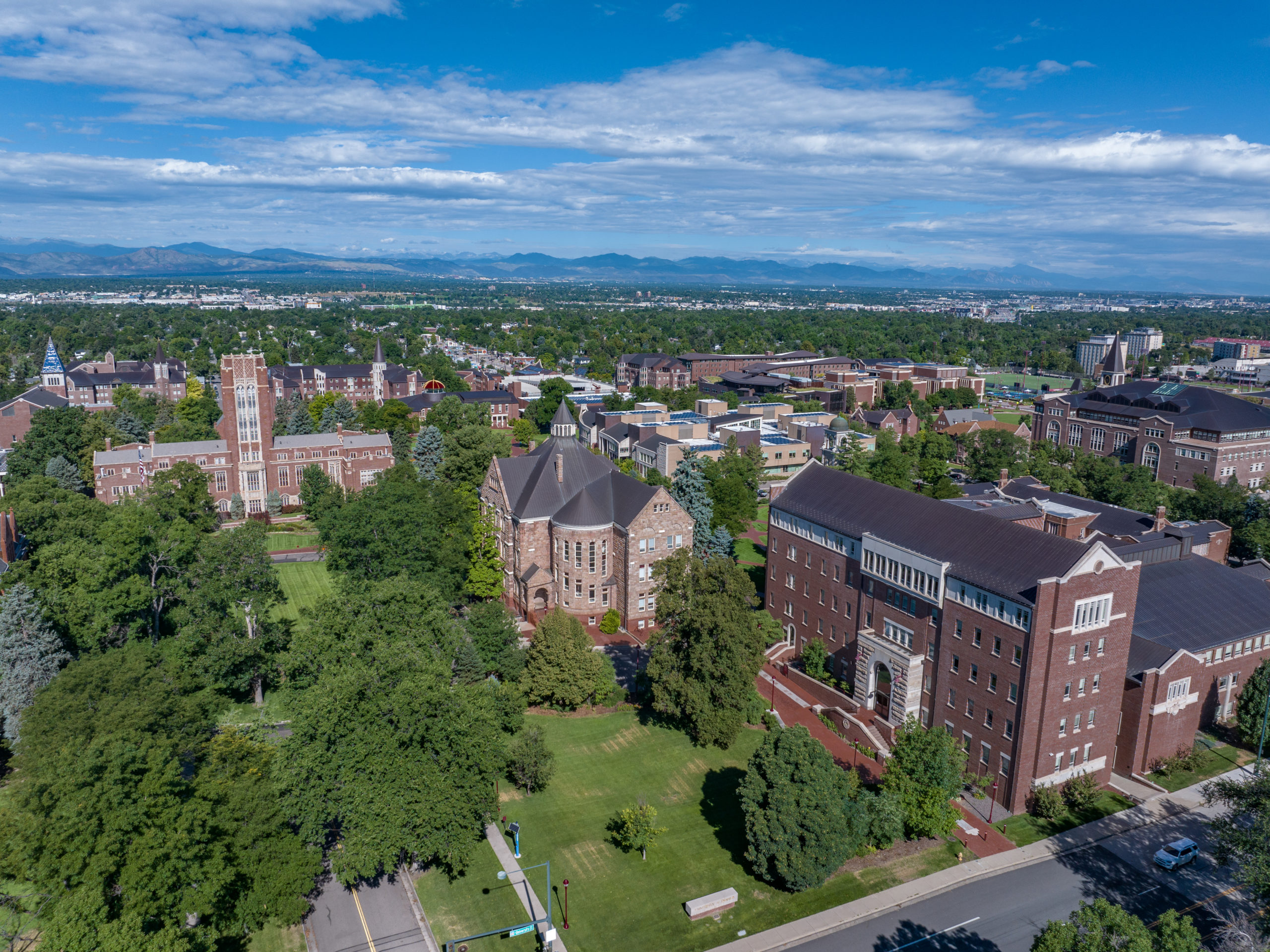
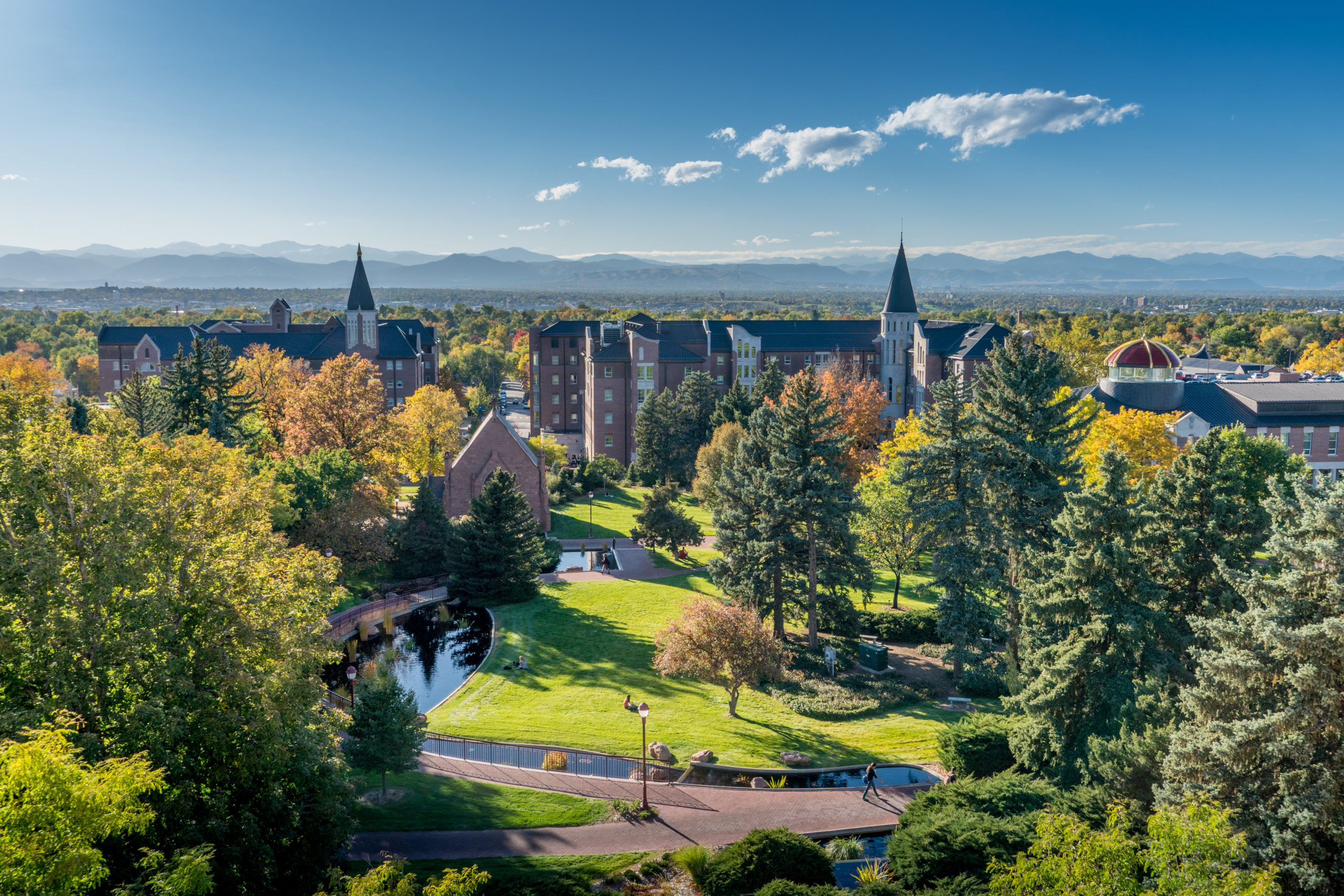
At the University of Denver, students build the skills, knowledge, and perspective needed to thrive in a dynamic world and excel in meaningful careers. From our world-class faculty and facilities in the city of Denver to our campus in the Colorado Rocky Mountains, our Four-Dimensional Experience means we invest in every dimension of our students’ personal and professional development. At DU, we ignite academic excellence, foster exceptional character, architect powerful career readiness and nurture whole-body well-being.
Small class sizes, a focus on experiential learning, top-ranked study abroad programs and a strong and supportive alumni base help our students build the foundations needed to design lives and careers that lead to big impacts and positive changes. As one of the smallest private R1 institutions in the nation, we empower students to solve the challenging problems of our time and make new discoveries in our labs and our communities. And with our flexible quarter system, students are easily able to explore and pursue multiple majors and minors across disciplines, choosing from over 100 academic areas of study.
DU boasts 100 student organizations, 18 Division I athletic programs (including our ten-time national championship men’s hockey team), and 30 club and 20 intramural sports.
Events & Resources
Daily Campus Visits
We truly believe that visiting campus is the best way to learn about a school. Undergraduate Admission offers campus visits Monday through Friday at 9 a.m. and 2 p.m. These include a 60-minute information session with an Admission representative, followed by a 90-minute campus tour with a current DU student.
Virtual Info Session
During our virtual information sessions, a DU Admission representative will discuss academics, campus life and the application and financial aid processes for prospective DU students. You'll also get to know some current students and their experiences and perspectives.
Scholarships & Financial Aid
Affordability Overview
From DU
When applying to the University of Denver, you and your family might have a lot of questions about how you’ll cover the costs of tuition, housing and other expenses. Our office is dedicated to helping each family create a strategy that works for them.
Along with grants and scholarships, loans and work-study are commonly included in aid offers. Your academic profile and financial need will both factor into the type and amount of financial aid you receive. Your financial aid offer will likely include a combination of these different types of aid and can come from various sources, including the University and federal and state governments.
99% of new undergraduates receive one of our annual merit scholarships, ranging from $12,000 to $33,000 each year. All applicants are automatically considered for merit scholarships when they apply for admission.
To apply for need-based aid, students must submit both the FAFSA and the CSS Profile. Our average need-based financial aid offer for first-year students is $51,002.
Scholarships Overview
From DU
Grants and scholarships are funds you receive that are applied directly to the cost of your education. They come in two types: need-based and merit-based. Eligibility for need-based scholarships is determined by your financial aid application and takes into account you and your family’s financial situation. To be considered for need-based aid, students must submit both the FAFSA and the CSS Profile.
Merit-based scholarships are awarded based on academic success or other accomplishments. All applicants are automatically considered for merit scholarships when they apply for admission to DU.
$84,567
$49,830
$34,737
Cost Breakdown
Estimated Cost:
$84,567The sticker price at Denver is $84,567. This includes the cost of tuition and fees, room and board, books and supplies, and other miscellaneous expenses.
The cost of attendance can vary from year to year and will typically rise over your four years in college. That said, colleges will recalculate your financial aid every year to take price increases and changes in your financial situation into account.
College costs can look different for every student based on their financial situation. To get a more accurate picture of what tuition at Denver would look like for you, try entering your financial information into their Net Price Calculator.
University of Denver Financial Aid
To apply for financial aid at University of Denver, you’ll need to submit the Free Application for Federal Student Aid (FAFSA).
The FAFSA uses financial information from the prior, prior year. That means you can submit the form even if you or your parents haven’t filed last year’s taxes.
The FAFSA code for University of Denver is 001371.
If you are looking for more information on how to complete the FAFSA, check out Scholarships360’s How to Complete the FAFSA Guide.
What percent of students at Denver receive merit-based financial aid?
99% of students at Denver receive merit-based financial aid. Students with test scores and/or GPAs near the top of the admitted range are more likely to qualify for this type of aid.
Apply to these scholarships due soon
See more Colorado scholarshipsPell Grants at University of Denver
16% of students at University of Denver receive Pell Grants.
The federal government awards Pell Grants to undergraduate students who demonstrate financial need by filling out the FAFSA. Students with a bachelor’s or professional degree are not eligible. Pell Grants do not be repaid. If you receive a Pell Grant, the award amount should remain consistent at any college you gain admission to. You can learn more about Pell Grant eligibility here.
Outside Scholarships
Students can use outside scholarships to supplement their financial aid package at Denver. Outside scholarships are awards offered by private and non-profit organizations separate from their college. To browse vetted, reliable outside scholarships, check out our popular lists:
How do outside scholarships affect your financial aid package at Denver?
Your financial aid eligibility is limited by your cost of attendance and/or your financial need. If you receive additional aid, such as a grant, scholarship or tuition benefit from outside of DU, we will first apply these funds to any unmet financial need, if applicable. However, if you have not applied for need-based aid, then these awards are applied to your account and are limited by your cost of attendance. If the private scholarship(s) causes you to go over your demonstrated financial need and/or cost of attendance, we may have to adjust your aid offer. We will reduce student loans first, then work-study, before reducing any DU scholarships or grants. In some cases, however, additional outside awards that must pay toward tuition charges may result in the reduction of a DU scholarship or grant.
What is the financial aid policy for transfer students at Denver?
Transfer students are also eligible for merit scholarships following review of their admission application. Transfer merit scholarships range between $12,000 and $25,000 annually. Transfer students interested in need-based aid must submit both the FAFSA and CSS Profile.
Admissions
Admissions Overview
From DU
At the University of Denver, you’ll be part of a culture that enriches every member of the DU community and advances the greater good. Our students are diversely talented and find many ways to contribute outside of academia, whether it’s through sports, the arts, community service, employment or student government.
Overall, our committee takes a holistic approach in considering a number of factors when shaping our class each year. While academic success is the main factor in our admission decisions, we value your essays and letters of recommendation, as well as your extracurricular activities. These help us learn how you can make a difference during your time at DU and how you’ll impact our community. DU has been test-optional since 2019.
You can apply to the University of Denver using the Common App at commonapp.org. You have the full support of the DU admission office. We’ll help to ensure the process is smooth so you can focus on your future.
DU offers both binding and non-binding options for both of our deadlines – Regular Decision and Early Action are non-binding, while Early Decision I and Early Decision II are both binding decisions that offer additional perks to applicants.
If you are considering applying Early Decision, DU Early Decision incentives include:
- Additional $5,000 annual merit scholarship
- DU meets full demonstrated need of top performers
- Earlier admission and financial aid notifications
- Stronger consideration for admission
75%
29
1258
1258 is the median SAT score and 29 is the median ACT score for admitted students at Denver. A score that is close to this median value indicates that you have a good chance of admission to the institution. However, it’s important to remember that colleges judge applications holistically. If the rest of your application is strong, it’s possible to make up for lower test scores.
Do I qualify for an application fee waiver at Denver?
Please indicate your desire for a fee waiver when completing the Common App and the University of Denver will process the request to waive the required fee.
Is Denver test-optional?
University of Denver is test-optional, which means that applicants are permitted, but not required, to submit their standardized test scores. If you choose not to submit your scores, admissions officers will weigh your grades, extracurriculars, essays, and interviews more heavily. If you aren’t sure whether to submit your standardized test scores, Scholarships360’s guide on whether to submit your test scores to test-optional schools can help.
What test scores do you need to get into University of Denver?
Colleges use standardized tests like the SAT, ACT, or CLT as one of many factors to determine their admissions decisions. A high score on one of these tests does not guarantee admission to a college, and a low score does not guarantee rejection. However, the majority of accepted applicants to University of Denver receive between a 28 and a 32 on their ACT, or a 1175 and a 1360 on their SAT.
Early Action
Early Decision I
Early Decision II
Regular Decision
What is the application deadline at Denver?
Students must apply by January 15 to enroll at Denver during the fall semester. Remember that college applications involve many pieces, including essays, a transcript, letters of recommendation, and more. Be sure to start your application as soon as you can to make sure you have enough time to make it as compelling as possible.
At Denver students also have the opportunity to apply Early Decision. In order to take advantage of this option, you’ll have to have your application in by November 1.
You can also choose to apply Early Decision II, with a later deadline of January 15.
And if you’re considering applying Early Action at Denver, remember that the deadline is November 1.
What is the transfer application deadline at Denver?
The transfer application priority deadline for a fall quarter start is June 1.
Academics
Student/Faculty Ratio
8:1
Graduation Rate
65%
Popular Majors
Percent of Students
Business, Management, & Marketing
35%
35% of graduates
Social Sciences
15%
15% of graduates
Biological & Biomedical Sciences
10%
10% of graduates
Psychology
8%
8% of graduates
Communications & Journalism
8%
8% of graduates
Visual & Performing Arts
7%
7% of graduates
Computer & Information Sciences
4%
4% of graduates
Engineering
4%
4% of graduates
Natural Resources & Conservation
2%
2% of graduates
Physical Sciences
2%
2% of graduates
English Language & Literature
1%
1% of graduates
Mathematics
1%
1% of graduates
History
1%
1% of graduates
Multi/Interdisciplinary Studies.
1%
1% of graduates
Languages & Literatures
1%
1% of graduates
Student Body
Undergraduate Students
5,986
Pell Grant 15%
Undergrad Students Over 25 6%
Part-Time Undergrad Students 5%
Percent Male / Female 45% / 55%
Ethnic Diversity at Denver
69% White
13% Hispanic
6% Multiracial
4% Asian / Pacific Islander
3% International / Non-Citizen
3% Black
2% Unknown
Student Outcomes
Student Outcomes Overview
From DU
At University of Denver, your degree can take you anywhere. Our annual First Destinations outcomes report highlights the first step on our students’ paths after graduation. Every year we report on data such as average salaries and top employment industries that not only highlight our graduates’ success, but illustrate how DU’s 4D Experience can truly lead to a career—and life—of purpose.
DU undergraduates reported the highest levels of employment in technology; education; hospitality and tourism; and real estate and construction, followed by financial services; health and human services; healthcare products and services; and accounting. Undergrads who decided to continue their education went into fields of study including finance, law, business analytics, accounting and more.
Each and every year for the past six years, undergraduates who took advantage of internships were more likely to report being employed after six months—and their starting salaries were $5,900 higher. And with more than 80% of DU graduates from the last three years reporting that they participated in an internship by graduation, it’s clear that gaining professional experience while enrolled in classes puts our students head and shoulders above the rest.
Graduate Income
$71,155
Median Debt $21,844
Debt 10 years after graduation $232
Graduation Rate 65%
What is the graduation rate at University of Denver?
65% of students who start at University of Denver finish their degree within six years of enrolling. This is 7% more than the national median. A higher graduation rate indicates that students have better experiences at an institution.
How much do graduates of University of Denver go on to earn?
The median income of students 10 years after starting at University of Denver is $71,155. This is $20,764 more than the national median.
This data is from the College Scorecard, which only surveys students from University of Denver who received federal financial aid.
Graduate earnings can vary widely based on many factors other than school choice. Major and career path are two important factors in how much a student goes on to earn. For more information, check out Scholarships360’s article on the average starting salary out of college.
How much do students at Denver take out in loans?
Graduates of Denver take out a median of $21,844 in federal student loans. This is $8,344 more than the national median. As you make decisions about your college loans, be sure to inform yourself on the advantages and disadvantages of each loan option. Scholarships360’s guide to navigating these different options is a great place to start.
Data Sources
We strive to provide users with the most up-to-date information and source data from publicly available sources, including the College Scorecard and directly from the colleges. College statistics can change throughout the year, but we do our best to update them as quickly as possible. If you see an error, feel free to contact us.
Join for exclusive scholarships, personalized matching, and application tracking. 0% Spam, 100% Free.